
Gutter Installation & Repair in Lithia, FL
Lithia homes near FishHawk and wooded lots need gutters secured firmly. We install seamless systems and replace aging sections.
Gutter Installation & Repair in Lithia Florida
In parts of Lithia, afternoon storm winds crossing open preserve lots can drive rain laterally beneath roof edges, increasing directional load along specific gutter runs.
Lithia homes are shaped by elevation, longleaf pine canopy, and rooflines that move water decisively toward specific corners of the structure. In neighborhoods like FishHawk Ranch and preserve-adjacent communities, discharge does not simply fall and disappear. It travels downhill, concentrates at inside valleys, and repeats along the same slab edges or rear yard slopes. Over time, that repetition makes certain corners handle more flow than they were originally designed for. What begins as subtle soil movement or extended dampness can gradually become more noticeable if the layout remains unchanged.
If you want to talk through what you are seeing and how your home is handling water, call 863-390-2150 and we will walk through it with you.
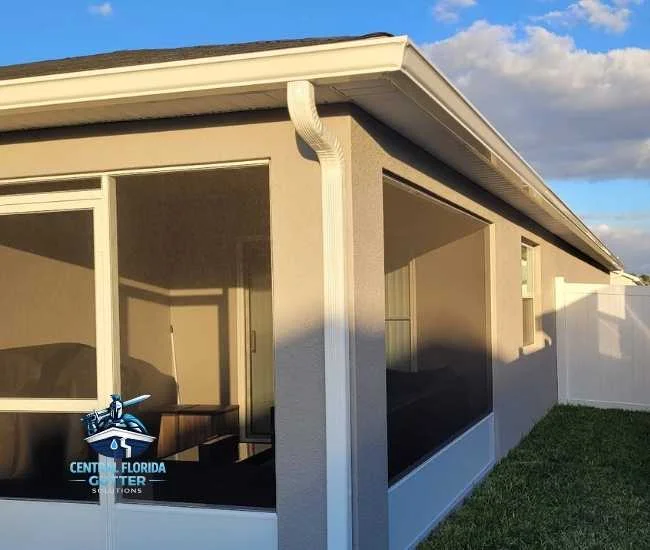
How Elevation and Roof Design Shape Water
Lithia sits on terrain that actually changes grade from front to back. That alone separates it from flatter parts of Hillsborough County. When water leaves a steep, segmented roof, it accelerates before it ever reaches the gutter. From there, discharge continues downhill instead of dispersing evenly across the yard.
In FishHawk West and similar communities, multiple hips and valleys often feed into a single gutter section, and on preserve-facing lots where rear elevations sit lower than the street, discharge begins reinforcing the same slope or corner, making it easier to see how small layout imbalances gradually turn into visible soil movement over time.
Complete Gutter Solutions For Every Home
From installation and cleaning to replacement and guards, Central Florida Gutter Solutions provides complete gutter services designed to protect and maintain your home across Central Florida.
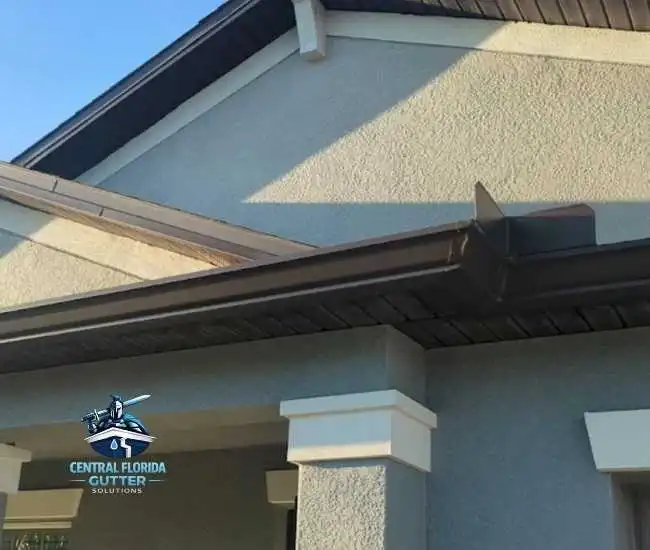
The Repeating Corners Lithia Homeowners Notice First
We also inspect valley metal and drip edge alignment, because slight separation at those transition points can allow water to bypass the gutter even when capacity is adequate.
Most homeowners in Lithia do not call after one visible issue. They reach out when the same corner of the home handles most of the roof repeatedly.
We hear about mulch thinning along one backyard slope or pine needles packing tightly into guards.
If you are unsure whether what you are seeing is typical for your roof design or something that tends to progress, call 863-390-2150 and talk it through with us.
When Slope and Repetition Redefine the Landscape
Water does not correct its own route once it finds an efficient path. On Lithia’s rolling terrain, repeated discharge gradually compacts sandy soil and shifts grade. Under pine canopy, damp debris slows drying and keeps fascia boards wet longer than expected.
What begins as minor overshoot at a valley corner can eventually become visible erosion along walkways, backyard slopes, or foundation edges. Because these changes unfold gradually, they rarely feel urgent. Waiting does not stop the process. It allows the same discharge path to become more defined.
Built for Steep Rooflines and Downhill Flow
Our work in Lithia focuses on managing volume, slope, and discharge distance together by installing and replacing seamless aluminum gutter systems sized for actual roof output and extending downspouts far enough to prevent discharge from cycling back toward slab edges or downhill yard transitions. Cleaning restores movement when debris is present, but it does not correct undersized sections or discharge points that end too close to a grade change.
If you want to walk through what makes sense for your home and its layout, call 863-390-2150 and we will explain what usually works here.
Why Two Homes on the Same Street Perform Differently
Lithia includes older acreage homes south of FishHawk Boulevard as well as tightly planned suburban neighborhoods, and each responds differently to repeated discharge. Older ranch homes on larger lots often rely on simpler gutter layouts that were not designed for evolving roofing materials or added roof sections, while homes in FishHawk Ranch and surrounding communities use segmented hip roofs and long valley runs that move water decisively into fewer exit points. On preserve-adjacent properties, rear yard slope and drainage direction matter just as much as gutter size when determining how water behaves after it leaves the system.
Two homes built around the same time can behave very differently depending on roof pitch, tree density, and how far water is allowed to travel once it leaves the system.
As repeated moisture settles along rear stem walls, subtle expansion at control joints can begin before soil displacement becomes obvious.
When Wind Exposure Changes Gutter Performance
Elevation is only one factor in Lithia. On lots backing to preserves or open green space near FishHawk Ranch, wind exposure changes how water meets the roofline before it ever reaches the gutter. Strong afternoon storms often push rain across the slope of the roof rather than straight down.
On steeper segmented roofs, that lateral movement can overload one side of a valley or direct additional flow toward a single fascia run. We have reviewed homes where the downhill corner was assumed to be undersized, yet the real issue was wind-driven concentration along a windward roof plane. The gutter size was correct for vertical rainfall, but storm direction added unexpected volume to one section.
In one case near FishHawk West, a homeowner noticed consistent staining along a rear elevation despite clean gutters and proper discharge extensions. Inspection showed that wind exposure across an open preserve was redirecting rainfall toward a specific hip and valley junction. That junction fed a short gutter run that was not reinforced for directional load.
Correcting this involves reinforcing high-exposure runs, verifying valley alignment, and adjusting hanger spacing to stabilize sections that carry wind-driven concentration. When wind exposure is factored into system design, flow distribution becomes more balanced across the roofline.
Downspout Offset Stress on Sloped Yards
On Lithia’s rolling terrain, downspouts rarely drop straight into level ground. They often terminate on a slope or at the edge of a retaining transition. When extensions are not anchored securely, repeated flow can shift them slightly downhill over time.
That small movement changes discharge direction and may expose soil directly at the slab edge instead of beyond it. Homeowners sometimes notice a narrow wash line forming beside the foundation without obvious overflow above.
Securing offsets and verifying that discharge remains directed beyond grade transitions ensures that flow leaves the structure consistently, even as soil shifts seasonally. Stable termination points are just as important as proper gutter sizing on elevated lots.
The Roofline and Slope Questions We Hear Most in Lithia
Control the Flow Before It Moves Downhill Again
Water issues in Lithia follow predictable patterns shaped by elevation, canopy, and roof geometry. Once you understand how discharge is moving around your home now, it becomes much easier to adjust the system before erosion, fascia wear, or structural stress become visible concerns.
If you want a clear picture of what is happening and what usually comes next if nothing changes, call 863-390-2150. We will walk through it with you so you can make decisions with confidence.
Protect Your Home With Gutter Experts You Can Trust
From seamless gutter installations to reliable repairs, our team delivers clean workmanship, durable materials, and results that stand up to heavy rain. We make protecting your home simple and stress-free.