
Gutter Installation & Repair in Riverview, FL
Riverview homes in growing neighborhoods with long rooflines need gutters set with care. We install seamless systems and replace aging runs.
Gutter Installation & Repair in Riverview, Florida
In tighter Riverview subdivisions, narrow side-yard spacing limits lateral drainage, increasing reliance on precise gutter discharge direction.
Riverview homes are largely modern, built on slab foundations with steep gables, segmented rooflines, and dense neighborhood layouts. Water here does not simply fall and disappear. It concentrates quickly at inside valleys, moves across flat terrain, and often lingers near slab edges where the ground absorbs slowly.
Over time, what we usually see is not a dramatic failure, but a repeated drainage pattern forming along one rear corner, one stretch of stucco, or one section of landscaping.
If you want to talk through what you are seeing around your home, call 863-390-2150 and we will walk through it with you.
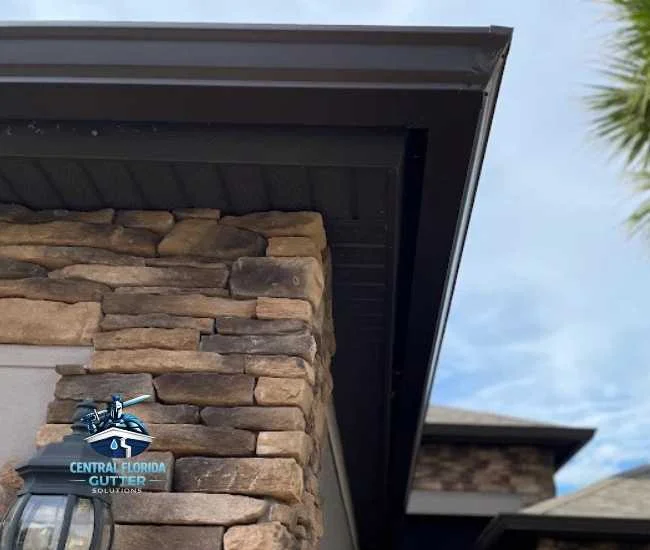
Where Riverview Runoff Goes
Riverview sits near the Alafia River basin, where a higher water table and flat grading influence how runoff behaves once it leaves the roof. Unlike ridge communities, water here does not travel downhill far. It tends to spread, slow, and return toward the structure if discharge is not extended properly.
In neighborhoods like Panther Trace, Water set, and South Fork, steep roof pitches and multiple valleys feed large volumes into just a few gutter sections. When those sections are sized for standard output rather than concentrated valley flow, overflow begins repeating at the same corners. The issue is rarely the first rainfall, but the repetition along the same slab edge or lanai transition that eventually becomes visible
Complete Gutter Solutions For Every Home
From installation and cleaning to replacement and guards, Central Florida Gutter Solutions provides complete gutter services designed to protect and maintain your home across Central Florida.
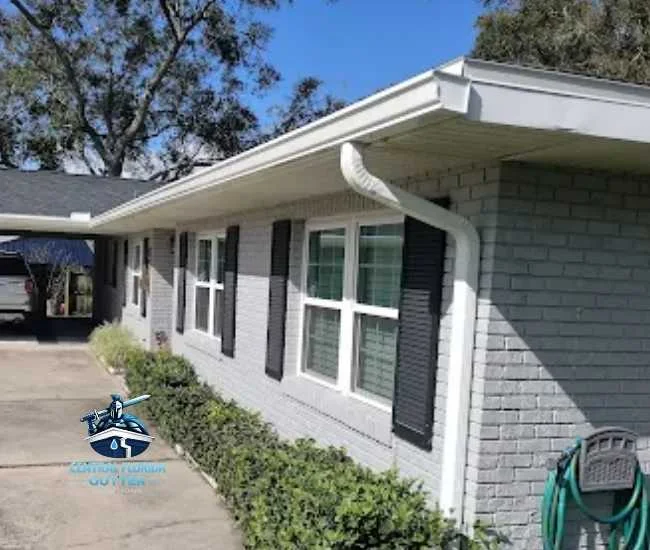
Rear Corners and Lanai Edges Under Load
We also evaluate transition points where upper and lower rooflines connect, since improperly flashed step-down sections can overload a short gutter run without obvious debris.
Most homeowners in Riverview do not call after one overflow. They reach out when the same section of the home handles most of the roof again and again.
We hear about mulch thinning along one rear elevation, moisture collecting near a screened lanai seam, or one downspout discharging more forcefully than the rest.
If you are unsure whether what you are seeing is typical for your roof design or something that tends to progress, call 863-390-2150 and talk it through with us.
How Saturated Ground Quietly Magnifies Small Gutter Mistakes
Water does not correct its own route once it finds an efficient path.
On Riverview’s flat lots, repeated discharge gradually compacts soil and alters grade near slab edges and driveway transitions. Where downspouts end too close to the home, moisture cycles back toward the foundation instead of dispersing outward.
On homes with screened lanais or pool enclosures, improper tie-ins allow water to back up quietly before exterior overflow looks dramatic. What begins as minor overshoot eventually presents as soil displacement, staining along lower stucco, or fascia that stays damp longer than it should.
Stucco and Pool Enclosure Gutter Systems
Our work in Riverview focuses on aligning gutter capacity, slope precision, and discharge distance with how the roof actually performs.
We install and replace seamless aluminum systems sized for true roof output rather than appearance alone. We extend downspouts far enough to prevent discharge from cycling back toward slab edges or flat yard transitions. Cleaning restores movement when debris is present, but it does not correct undersized sections or valley concentration issues.
If you want to walk through what makes sense for your home and its layout, call 863-390-2150 and we will explain what usually works here.
Alafia River Proximity, Modern Roof Segmentation, and Dense Subdivisions
Riverview’s housing stock is largely post-2000 construction, dominated by stucco-and-slab homes with steep gables and segmented roof geometry. These designs move water decisively into defined exit points rather than dispersing it evenly.
In communities like Waterset and South Fork, large roof footprints and tight lot spacing mean discharge direction matters just as much as gutter size. On properties closer to the Alafia River, heavier canopy and higher soil moisture influence drying time and debris load.
Two homes only streets apart can respond differently depending on valley placement, rear elevation grading, and how far water is allowed to travel once it leaves the system.
As moisture repeatedly meets expansion joints and control cuts along slab edges, subtle separation can begin before staining becomes visible.
When Lot Lines Redirect Runoff
In Riverview, many homes sit only a few feet from the neighboring property line. In communities like South Fork and Waterset, side yards are narrow, and fencing often runs parallel to the home. That spacing changes how discharge behaves once it leaves the downspout.
Originally, a short extension may have been enough to move water away from the slab. But when the yard slopes slightly toward a fence line or concrete walkway, runoff can meet a boundary quickly and redirect. Instead of dispersing outward, it travels along the fence edge or patio seam and returns toward the rear corner of the home.
We recently reviewed a property where the homeowner believed their rear gutter section was undersized. The trough capacity was adequate. The issue was that discharge hit a tight side yard corridor and had nowhere to spread. It followed the easiest path back toward the lanai edge, reinforcing the same damp zone after each storm.
Adjustments in these cases often involve extending discharge beyond confined corridors or redirecting flow toward open lawn areas. When lot spacing is tight, direction matters as much as capacity.
Lanai Tie-In Alignment Issues
Screened lanai and pool enclosures common in Riverview require careful gutter tie-ins where rooflines meet. If alignment between the main roof gutter and enclosure channel is slightly off, water can hesitate at the junction.
That hesitation does not always create visible overflow. Instead, a small volume may track along the enclosure beam or drip at connection points during sustained rainfall. Homeowners often notice staining at the seam before recognizing the source.
Correcting tie-in alignment ensures water transitions smoothly from the primary roofline to the enclosure system without pooling at the joint. Smooth transfer at these connection points prevents gradual moisture buildup along structural seams.
Questions Riverview Homeowners Ask Before Upsizing or Re-Routing Gutters
Correct the Discharge Path Before It Reaches the Slab Edge
Water issues in Riverview follow predictable paths shaped by roof geometry, flat terrain, and discharge direction. Once runoff begins reinforcing the same route, small imbalances gradually become visible along stucco lines, landscaping edges, or slab transitions. Understanding how water is moving now makes it easier to adjust the system before erosion, staining, or structural wear become larger concerns.
If you want a clear picture of what is happening around your home and what usually comes next if nothing changes, call 863-390-2150 and we will walk through it with you.
Protect Your Home With Gutter Experts You Can Trust
From seamless gutter installations to reliable repairs, our team delivers clean workmanship, durable materials, and results that stand up to heavy rain. We make protecting your home simple and stress-free.