
Gutter Installation & Repair in Waverly, FL
Gutter installation and repair in Waverly, FL. Designed for ridge elevation, sandy soil erosion, roof runoff speed, and local water movement patterns.
Gutter Systems on Waverly’s Ridge
Waverly sits along one of the higher stretches of the Lake Wales Ridge. That elevation changes how water behaves the moment it leaves the roof. Instead of settling, runoff gains speed and continues downhill across sandy soil that shifts easily when flow is not controlled.
On elevated ground, problems rarely begin with standing water. They begin with momentum. Fast-moving discharge overshoots gutter edges, concentrates at one corner, and gradually reshapes grading near the foundation.
Many Waverly lots rely on roadside swales and septic drain fields, so gutter discharge placement has to respect where water is being absorbed on the property.
If you want to understand how elevation is affecting runoff around your Waverly home, call 863 390 2150.
Faster Roof Discharge on Elevated Waverly Homes
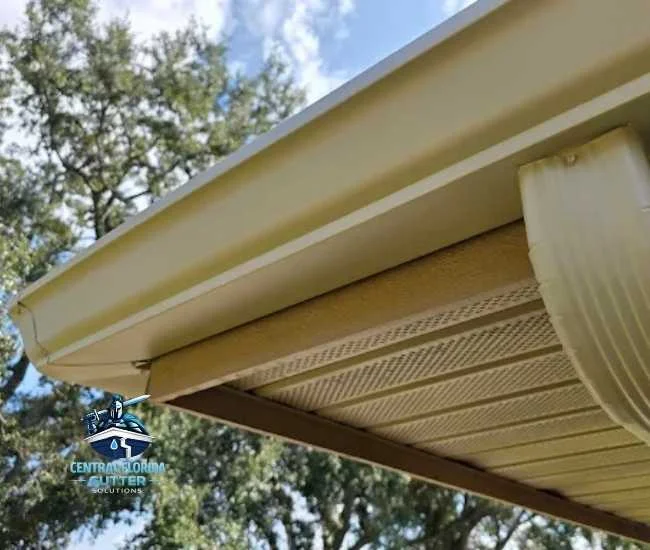
Many Waverly properties sit slightly higher than surrounding land. Even small elevation differences increase runoff speed as water reaches the eave. On homes with long roof runs or concentrated valleys, that added velocity can overwhelm shorter gutter sections.
Instead of pooling, water travels forward. If the gutter is undersized or pitched incorrectly, flow skips past the front edge or spills at one corner. Over time, that repeated impact changes soil grading beside the slab.
On long runs, the more common failure is not visible overflow, it is standing water caused by subtle pitch errors that keeps weight on the gutter and pressure against the fascia.
In Waverly, gutter performance depends on managing speed and capacity together.
Complete Gutter Solutions For Every Home
From installation and cleaning to replacement and guards, Central Florida Gutter Solutions provides complete gutter services designed to protect and maintain your home across Central Florida.
Sandy Soil and Repeated Discharge Paths
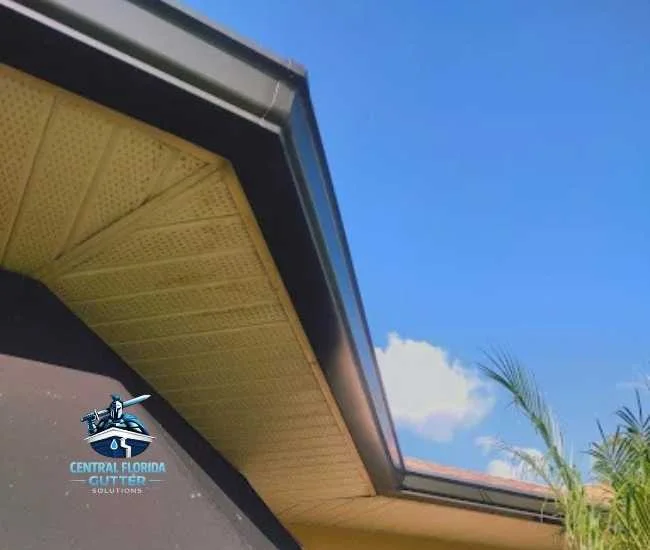
On elevated lots, runoff keeps moving downhill after it hits the ground. Sandy ridge soil may absorb moisture vertically, but concentrated discharge causes lateral erosion that spreads outward from the same point and deepens over time.
Proper downspout placement and adequate discharge distance are essential to keep water moving far enough from the foundation.
If you are noticing soil movement or repeated washout near one corner of your home, call 863 390 2150 to review your discharge layout.
Overshoot as an Early Indicator
Most Waverly homeowners call when the same corner continues to wash out or when fascia boards remain damp longer than expected.
Fast-moving roof water can overshoot the gutter entirely during heavier flow. When this happens repeatedly, moisture builds along fascia edges and soil near the slab begins to shift.
When the drip edge does not project far enough, water can track back by surface tension and quietly soak the fascia wrap until staining or soft spots appear months later.
Homes with older five inch systems often struggle to control valley concentration at ridge elevations. Upgrading to a properly pitched six inch seamless aluminum system or adding an additional downspout frequently improves control without replacing the entire layout.
Speed and Capacity Control on Ridge Properties
Our work in Waverly focuses on controlling velocity as much as volume. That includes seamless aluminum gutter installation, repair of sagging or improperly mounted sections, full replacement when capacity is insufficient, downspout relocation, and targeted cleaning when buildup restricts flow.
On elevated ridge lots, small adjustments make a significant difference. Increasing gutter size, correcting pitch, reinforcing bracket spacing, or extending discharge farther downhill can dramatically alter how runoff behaves.
Each roof and lot combination responds differently depending on elevation, roof span, and valley concentration. To schedule a review of your current system, call 863 390 2150.
How Waverly Home Design Interacts With Elevation
Older frame homes in Waverly often rely on original fascia boards and simpler rooflines. When mounting weakens, fast-moving water can run behind the gutter instead of into it.
Long block ranch homes with extended roof runs increase velocity before water reaches the edge. If downspouts are limited to one side, discharge speed intensifies at that exit point.
Across these home styles, elevation adds force to every gallon leaving the roof. Systems must be matched to that added movement.
When Standing Water Turns Into Structural Fascia Failure
A lot of Waverly homes from the 1970s and 1980s, plus many late 1990s to mid 2000s builds, have long straight eaves where builders ran standard 5 inch K style gutters with minimal slope. The system can look fine from the yard, but a slight pitch miss leaves water sitting in the trough between downspouts. That trapped weight gradually compresses the back of the gutter into the wood fascia, especially on older sections still using spike and ferrule fasteners. Over time, the wood can start rotting from the inside out while the exterior paint or aluminum wrap still looks intact.
This shows up in practical ways. A homeowner off State Road 540 might notice a section that feels soft when tapped, a waviness along the front edge, or fasteners that keep loosening even after they are tightened. In some cases the real trigger is the roof edge detail. If the drip edge is short, water can cling back toward the fascia instead of dropping cleanly into the gutter, which keeps the top edge damp even when the yard looks dry.
The correction is usually mechanical, not dramatic. Re-establishing pitch over the full run, switching to hidden hangers where the fascia will hold, and addressing the drip edge to force a clean drop often stops the quiet damage cycle.
Expansion Pressure on Long Gutter Runs
Waverly’s daily heat swings put long seamless aluminum runs through constant expansion and contraction. When gutters are pinned too tightly at the ends, the metal has nowhere to move, so it bows outward. That movement can pull screws out of the fascia or open seams at miters and end caps. You may not see a leak line right away, but you can see the hardware shifting, the front edge wavering, or a corner that never stays straight after repairs.
This is one reason repeated fastener resets fail on long runs near US 27. The fix is allowing controlled movement with proper hanger spacing, leaving room at terminations, and using sealing methods that tolerate flex instead of turning brittle.
Common Questions Ridge and Rural-Edge Homeowners Ask
Recognize the Pattern Before Damage Spreads
On elevated ground, water gains speed quickly and continues using the same downhill route unless redirected.
If you are seeing overshoot, fascia dampness, or soil washout around your Waverly home, call 863 390 2150. We will evaluate how elevation, roof design, and discharge placement are working together and recommend the most practical correction.
Protect Your Home With Gutter Experts You Can Trust
From seamless gutter installations to reliable repairs, our team delivers clean workmanship, durable materials, and results that stand up to heavy rain. We make protecting your home simple and stress-free.