
Gutter Installation & Repair in Lake Placid, FL
Lake Placid homes near open water and wide lots need gutters set with proper pitch. We install seamless systems and replace aging runs.
Gutter Installation & Repair in Lake Placid, Florida
Homes in Lake Placid sit on ridge terrain shaped by sandy soil, nearby lakes, and subtle elevation shifts from one street to the next. That setting changes how water behaves once it leaves the roof. On slightly higher lots, runoff gains speed quickly, and across much of the area, loose sand shifts when discharge repeats in the same place.
On older Lake Placid ranch homes with wood fascia, the gutter can stay attached while the fascia slowly rolls outward under load, which changes how the roof edge feeds the trough.
Over time, what we usually see is not a sudden failure but a pattern forming. Mulch migrating downhill from the same corner. A shallow dip forming below one downspout. Fascia staying darker longer on the shaded side of the house.
If you want to talk through what you are seeing and how your home is handling water, call 863-390-2150 and we will walk through it with you.
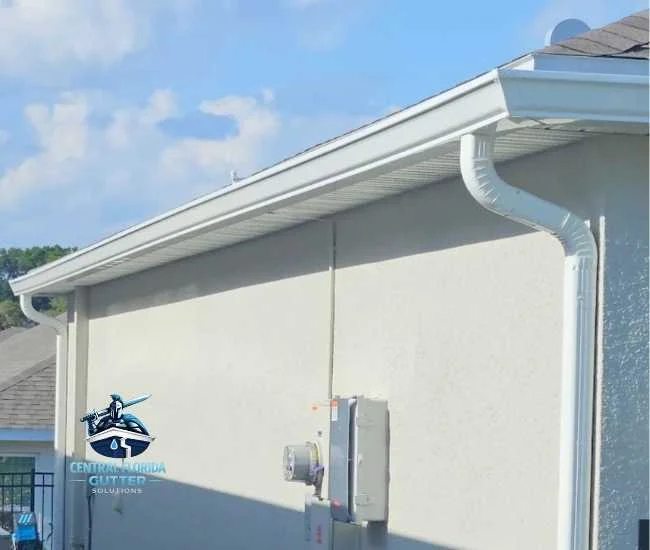
How Elevation and Lake Air Shape Movement
Lake Placid sits along the Lake Wales Ridge, which means water does not linger at the roof edge. It accelerates toward the lowest available direction and tends to reuse that route over time.
Around here, sandy ridge soil absorbs briefly, then gives way when discharge repeats. Near lakes such as Lake June and Lake Placid, higher humidity slows drying along fascia and trim, allowing debris inside the gutter to stay damp longer than homeowners expect. In slightly elevated areas like Leisure Lakes, runoff gains speed as it exits the downspout, increasing erosion at the base.
When roof valleys funnel more water into a single section than the gutter can carry, overflow drops beside the home and strikes loose sand that cannot hold its shape. That is often when homeowners begin noticing shallow trenches forming or slab edges becoming exposed. Water here does not redirect itself. It follows the easiest path unless the system guides it somewhere better.
Complete Gutter Solutions For Every Home
From installation and cleaning to replacement and guards, Central Florida Gutter Solutions provides complete gutter services designed to protect and maintain your home across Central Florida.
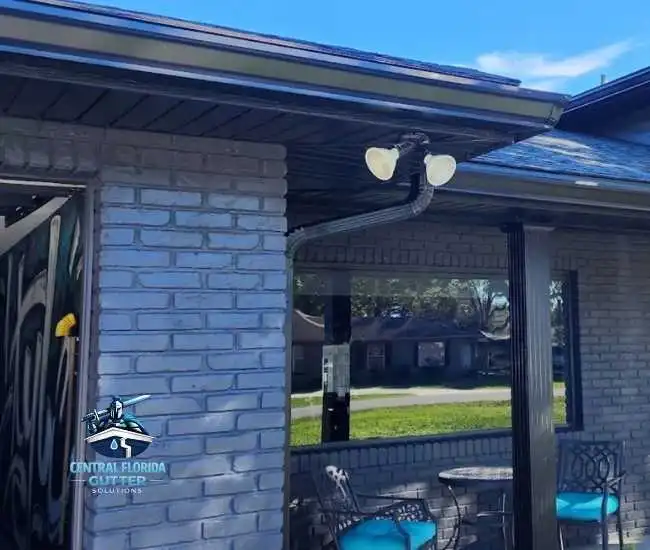
The Subtle Signs That Usually Lead to a Call
Most homeowners in Lake Placid do not reach out after one event. They call when the same signs return season after season, such as soil continuing to thin along one stretch of foundation or a narrow strip of sand below a downspout that keeps deepening over time.
We see this most often in ridge neighborhoods where small elevation differences push runoff toward the same side yard.
If the run was mounted level for curb appeal and spike fasteners are still present, standing water weight can widen the holes and start sagging that shows up first as a small joint weep at an end cap or corner.
If you are unsure whether what you are seeing is typical ridge behavior or something that tends to progress, call 863-390-2150 and talk it through with us.
How Repeating Drainage Alters Structure
Gutter issues in Lake Placid usually follow a clear chain. Debris restricts movement. Restricted movement allows water to sit. Standing water increases overflow at the next release point.
When overflow becomes routine, water falls repeatedly onto sandy soil that cannot hold its structure, which leads to erosion along slabs, walkways, and patios, and that is when homeowners usually notice uneven edges or persistent washout.
Near the lakes, slower surface drying keeps fascia damp longer than it should be. These changes unfold gradually, and waiting does not stop the pattern. It allows it to become established over time.
Built for Ridge Elevation and Lake Air
Gutter systems in Lake Placid must manage volume, speed, and discharge distance together. Roof sections on ridge homes often release water faster than builder-standard systems were designed to handle, especially where multiple valleys feed into one run, which leads to repeated overflow at the same corners if capacity is not adjusted.
Our work focuses on matching gutter size to actual roof output and extending discharge far enough to slow runoff before it reaches bare sand.
If you want to walk through what makes sense for your home and its location, call 863-390-2150 and we will explain what usually works here.
When the Fascia Starts Carrying the Load
Lake Placid has a lot of older ranch stock with long, straight eave lines. Those homes were not always framed with fascia boards that were braced for the leverage a full gutter run can create. You can have a system that looks fine from the yard and still get trouble because the attachment surface is slowly moving. When water sits in the trough after a cycle and fasteners are spaced too far apart, the fascia can begin to roll between points. The gutter still looks attached, but the back edge drops just enough that water starts feeding behind the run instead of into it.
A common scenario is a long run that was installed level to look clean from the street. It still drains, but it also holds shallow pockets that keep steady weight on spikes or hangers. Over time, those holes widen, the run begins to sag, and the drip edge stops dropping cleanly into the trough. Homeowners often notice a damp strip at the soffit vents or peeling paint on fascia wrap before anything looks dramatic at the yard line.
Heat makes the next phase show up at joints. Aluminum expands hard in the sun, then cools fast when storms roll through. If the ends are pinned too tightly, that movement shears sealant at end caps and miters until a slow weep starts. Fixing it means corrected pitch, tighter hanger spacing, and joints rebuilt with expansion in mind, not just more caulk.
Roof Geometry and Location Working Together
Lake Placid homes span several decades, and each behaves differently. Older ranch homes near the town center were often built when soil absorption was expected to manage much of the runoff.
Newer homes in communities like Placid Lakes use steeper rooflines and more complex valleys that shed water quickly but concentrate it at corners. Two homes only a few streets apart can experience very different water behavior, often due to elevation, tree cover, roof geometry, and proximity to the lakes.
Questions We Hear From Homeowners in Lake Placid
Structural or System Framing: Septic Lots and Pop Up Emitters
Parts of Lake Placid rely on septic, and newer builds may use pop up emitters to move roof water toward swales. That changes what good discharge looks like. A downspout that ends in the wrong spot can keep wetting the same area near a drain field even when the surface sand looks dry, because moisture is spreading below grade.
Emitters that are buried too shallow can also stay clogged under the soil line and keep water cycling back toward the foundation edge. Homeowners notice soft ground near one corner, a faint odor after storms, or a strip that never fully dries. In those cases, the fix is usually routing and outlet placement, not bigger gutters. It is about getting water to the part of the lot designed to accept it.
Understand the Pattern Before It Sets
Water issues in Lake Placid follow predictable paths shaped by ridge elevation, sandy soil, nearby lakes, and tree cover. Once runoff begins using the same route, it reinforces that direction over time. Understanding how water is moving now makes it easier to adjust the system before erosion, moisture damage, or structural wear become visible concerns.
When water begins tracking behind the gutter edge, the escalation is often soffit vent saturation and attic humidity at rafter tails, not just what you see at the ground.
If you want a clear picture of how water is behaving around your home and what usually comes next if nothing changes, call 863-390-2150 and we will walk through it with you.
Protect Your Home With Gutter Experts You Can Trust
From seamless gutter installations to reliable repairs, our team delivers clean workmanship, durable materials, and results that stand up to heavy rain. We make protecting your home simple and stress-free.