
Gutter Installation & Repair in Clermont, FL
Clermont homes on rolling terrain with long rooflines need gutters set with proper pitch. We install seamless systems and replace aging runs.
Gutter Installation & Repair in Clermont, Florida
Clermont is shaped by elevation. Hills, ridgelines, and lakes create water behavior that feels different from flatter parts of Central Florida. Here, gravity does most of the work. Rooflines are often steep, lots are rarely level, and discharge tends to move downhill with force.
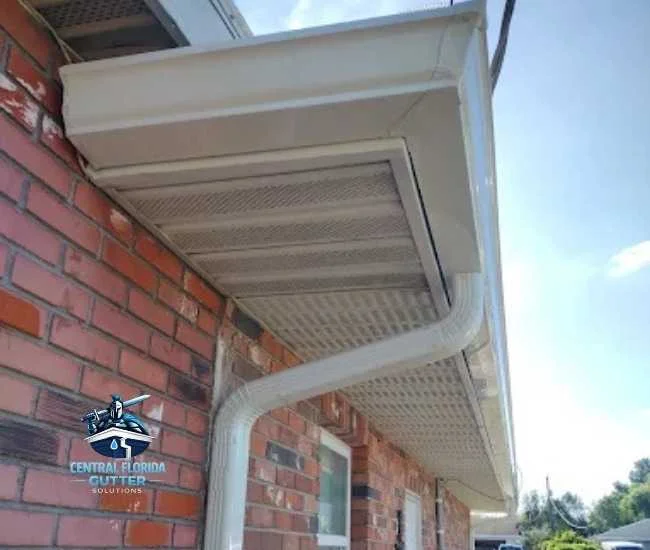
On long Clermont runs, missing or poorly tucked drip edge can let water wick back into fascia by capillary action, even when the gutter looks like it is catching most of the roofline output.
Over time, what we usually see in Clermont is not a sudden failure but a repeating pattern. Water exits at the same corner. Soil shifts in the same direction. One stretch of foundation carries more moisture than the rest.
If you want to talk through what you are seeing and how water is moving around your home, call 863-390-2150 and we will walk through it with you.
How Clermont’s Hills Control the Drop
Clermont sits on some of the highest natural ground in the region, so once water leaves the roofline it rarely disperses evenly. It accelerates down long roof runs, funnels through valleys, and exits into soil that often slopes away from the structure. Around Lake Minneola and along Scenic Highway, subtle grade changes determine where discharge collects, and on ridge lots near the Citrus Tower, runoff typically reinforces the lowest exit point season after season.
When steep roof valleys direct more water into a single gutter section than it can handle, overflow begins at the edge and tracks down the same wall repeatedly, which is often when homeowners notice erosion forming along the slab or stucco that never seems to dry evenly. In Clermont, gravity is the constant factor, so the system has to account for speed and travel distance, not just total water volume.
Complete Gutter Solutions For Every Home
From installation and cleaning to replacement and guards, Central Florida Gutter Solutions provides complete gutter services designed to protect and maintain your home across Central Florida.
When the Same Corner Keeps Taking the Hit
Most homeowners in Clermont do not call after one isolated event. They reach out after seeing the same downhill pattern repeat, such as soil washing away along one side yard or mulch thinning near the same downspout.
We see this most often in hillside neighborhoods like Skyridge Valley where large roof surfaces push water toward limited exit points.
If hangers were spaced too far apart to save time, the trough can slowly settle between points, and the first sign is often a faint seam weep at an end cap or miter rather than a visible spill.
If you are unsure whether what you are seeing is typical for Clermont’s terrain or something that tends to progress, call 863-390-2150 and talk it through with us.
How Gravity Reinforces the Same Exit Points Over Time
Water issues in Clermont usually follow a chain. A small overflow leads to repeated splash-back. Splash-back keeps the base of the wall damp. Damp soil on a slope begins to shift.
Once soil movement begins, discharge finds that slightly lowered path again, which leads to deeper erosion along the same stretch of foundation, and that is when homeowners usually notice uneven ground or small gaps forming near walkways.
Because most Clermont lots are not level, even minor discharge imbalances tend to become more pronounced over time, and while the shift may feel gradual, the downhill route becomes more defined with each cycle as water continues following the same path. Waiting does not change how gravity behaves. It simply gives it more opportunity to deepen and reinforce that route along the structure and surrounding soil.
Systems Designed for Steep Rooflines and Sloped Lots
Gutter systems in Clermont must manage speed, capacity, and discharge distance together. Homes with long roof runs and multiple valleys require enough capacity to prevent repeated overshoot at the same sections.
Our work focuses on matching gutter size to roof output and extending downspouts far enough to slow discharge before it reaches bare soil.
If you want to walk through what makes sense for your home and its elevation, call 863-390-2150 and we will explain what usually works here.
When the Roof Edge Fails the Gutter
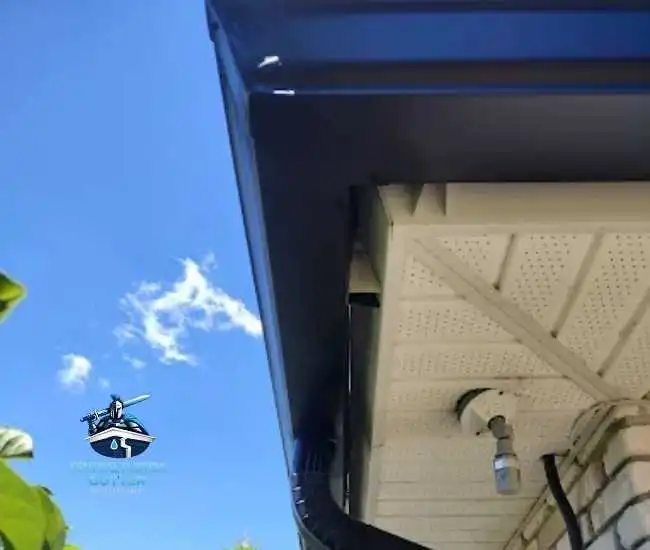
A lot of Clermont troubleshooting is not about a bigger gutter. It is about how the roof edge actually delivers water into the gutter. If the drip edge is missing, cut short, or tucked wrong, water can cling to the underside of the roof edge and wick back toward the fascia instead of dropping cleanly into the trough. On sloped lots, that mistake gets overlooked because the ground movement pulls your attention downhill, but the real damage can be happening at the eave line.
A realistic scenario we see around Lake Minneola is a long front run that looks clean from the street, but one section keeps showing a darker fascia strip after a cycle. The gutter is not overflowing. It is catching volume. The issue is that the back edge is staying wet because the roof edge is feeding behind the gutter in a thin sheet. Over time, that constant wetting softens paint, swells wood, and makes fasteners lose bite.
Once the fascia face starts changing, joints usually follow. Heat expansion works long runs hard, and if the system has no room to move, seams and end caps start to weep. Fixing it means correcting how the roof edge feeds the gutter, tightening hanger spacing where needed, and rebuilding joints so movement is expected, not resisted.
Why Two Clermont Homes on the Same Street Can Drain Differently
Clermont’s housing spans multiple eras and elevations, and older homes near downtown often sit on smaller lots with established grading that directs discharge toward the street, many of which were built with simpler rooflines that behave differently than today’s more complex designs.
Newer Mediterranean-style homes in elevated communities use tile roofs and complex valleys that concentrate flow quickly. These homes shed water efficiently, but only when gutters are properly sized and discharge is planned for slope and distance.
Two homes across the street from each other can behave very differently here. The difference usually comes down to roof pitch, elevation change, soil stability, and how far water is allowed to travel once it leaves the system.
Real Questions Clermont Homeowners Ask About Gutters and Hills
Environmental Driver: Wind Lift Before the Rain Hits
Clermont gets fast moving summer gusts that can hit the roof edge before the heavy part of the storm arrives. On long runs, that wind can flex the trough upward and then drop it back down, which is how hangers start loosening even when the gutter is sized correctly. It also changes where water lands at the edge.
If a run is already stressed by wide hanger spacing or a roof edge that does not feed cleanly, the wind makes the weak spot show up faster. Homeowners notice a small gap at the fascia line, a section that sounds different in a storm, or a seam that starts to mist the wall. In those cases, the fix is attachment strength and edge detailing, not just capacity.
Understand the Downhill Pattern Before It Becomes Structural
Water issues in Clermont tend to follow predictable paths shaped by elevation, roof geometry, and overall slope, and once discharge begins reinforcing the same downhill route, that path becomes more defined over time. Understanding how water is moving now makes it easier to adjust the system early, before erosion, fascia damage, or foundation stress begin to appear.
When water starts tracking behind the gutter edge, the escalation is often soffit vent dampness and rafter tail staining that shows up inside the eave before anything looks dramatic at the yard line.
If you want a clear picture of how your home is handling water and what usually comes next if nothing changes, call 863-390-2150 and we will walk through it with you.
Protect Your Home With Gutter Experts You Can Trust
From seamless gutter installations to reliable repairs, our team delivers clean workmanship, durable materials, and results that stand up to heavy rain. We make protecting your home simple and stress-free.