
Gutter Installation & Repair in Lake Hamilton, FL
Lake Hamilton homes with expansive rooflines and large lots need gutters set with proper pitch. We install seamless systems and replace aging runs.
Gutter Installation & Repair Around Lake Hamilton, Florida
Homes in Lake Hamilton sit where subtle elevation changes, compacted soil, and nearby water influence how runoff behaves once it leaves the roof, and water does not always move away from homes the way homeowners expect.
Frequent reroofing cycles in lake-adjacent neighborhoods also alter drip edge depth, subtly changing how water transitions into the gutter.
Over time, what we usually see is not sudden failure but gradual shifts. Roof surfaces age, landscaping fills in, and discharge points stop matching how the property actually moves water. The first signs often appear near fascia, slab edges, or ground that never quite dries.
If something about how water is moving around your home has started to feel off, call 863-390-2150 and talk it through with us.
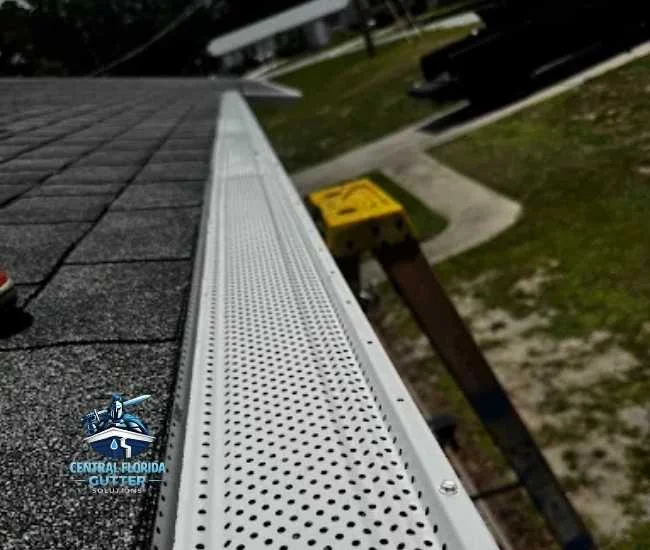
How Lake Proximity and Subtle Grades Shape Water Movement in Lake Hamilton
Around Lake Hamilton, water rarely disappears where it lands. Homes closer to the lake often sit slightly lower, while inland blocks still guide surface water toward specific sides of the property.
What usually happens is water spreading outward across the ground rather than pooling in one obvious spot. When gutters release water too close to the structure, that runoff follows small grade changes and slowly works its way back toward the home.
This is one of those gutter problems that does not look urgent at first. The ground still looks intact, but water is quietly teaching itself the same route over and over.
Complete Gutter Solutions For Every Home
From installation and cleaning to replacement and guards, Central Florida Gutter Solutions provides complete gutter services designed to protect and maintain your home across Central Florida.
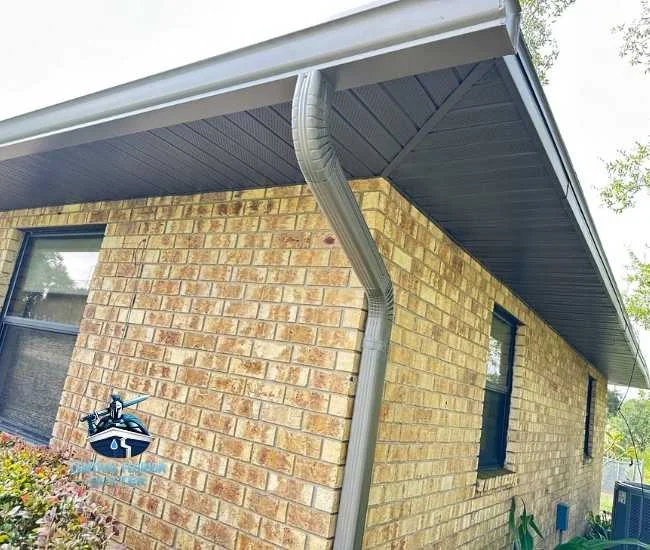
The Early Patterns Lake Hamilton Homeowners Notice
Most homeowners in Lake Hamilton reach out after noticing patterns rather than emergencies, like one area of the yard staying damp, a side of the home that never fully dries, or trim that looks weathered despite the roof appearing fine. In older areas near Main Street, decades-old gutter systems that were never adjusted often allow one issue to lead to another as water keeps following the same path.
If those signs sound familiar, call 863-390-2150 and we can help explain what the system is doing.
How Repeated Water Paths Turn Into Structural Problems
Water does not correct itself once it finds an easy route.
When a gutter releases water too close to the home, that water runs down the wall, settles into nearby soil, and begins spreading across the surface. When that path repeats, soil stays saturated longer, materials dry unevenly, and that is when homeowners usually notice staining, soft fascia, or ground that never quite firms up.
We often find that older spike-and-ferrule systems have loosened within block fascia boards, reducing the gutter’s ability to hold consistent slope under load.
Because the change happens slowly, it is easy to underestimate how long water has been following the same route. Waiting allows that path to become more established and harder to redirect.
Adjustments Designed for Lake-Adjacent Drainage Behavior
Our work in Lake Hamilton focuses on guiding water far enough away from the home to break established patterns. That includes gutter installation, repair, replacement, downspout routing, and targeted cleaning when debris is actively restricting flow.
Homes near the lake and older neighborhoods often benefit from changes that manage both discharge distance and concentration points together. In some cases, that means resizing the system. In others, it means correcting pitch or extending downspouts so water does not return toward the structure.
If you want to talk through what makes sense for your home, call 863-390-2150 and we will walk through it with you.
What Local Home Design Tells Us About Water Behavior
Much of Lake Hamilton consists of mid-century block ranch homes and manufactured housing with simple rooflines. These homes shed water efficiently but sit close to grade, which makes downspout placement especially important.
Newer infill homes and reroofed properties often add roof sections that concentrate water into fewer gutter runs if the system is not adjusted. Near low-lying areas around Lake Martha, even small elevation changes can cause water to linger once it reaches the ground.
Across these homes, the same rule applies. Where water exits matters just as much as how much water there is.
As attachment points weaken, small gaps open behind the gutter, allowing moisture to wick into fascia ends before any visible ground saturation appears.
Common Questions From Lake-Adjacent Homeowners
Talk It Through Before Water Chooses the Path
Gutters in Lake Hamilton quietly shape how water treats a home. When they work, they are easy to forget. When they fall behind, the signs tend to spread slowly outward.
If you want help understanding where water is going now and what usually comes next if nothing changes, call 863-390-2150. A simple conversation can prevent years of gradual damage.
When Reroofing Changes the Gutter Equation
In Lake Hamilton, many homes have been reroofed at least once, sometimes twice. Each reroof subtly changes how water leaves the roof edge. Shingle thickness, underlayment buildup, and new drip edge profiles all affect the transition into the gutter.
On older ranch homes near Main Street, we regularly see gutters that were installed to match the original roof line. After a reroof, the shingle stack may extend slightly farther out, or the drip edge may sit at a different angle. The gutter remains in the same position, but the water path shifts forward or backward by a small margin.
On one mid-century block home, the gutter size was appropriate and the downspouts were clear. The issue was that the new shingle edge projected just enough that heavy flow overshot the rear wall of the gutter during peak discharge. There was no dramatic spill. Instead, water traced the fascia edge intermittently and left subtle staining.
This type of problem is not about soil grade or lake proximity alone. It is about alignment between roof edge and gutter lip. When reroofing changes that geometry without adjusting the gutter position, the system behaves differently even if nothing appears broken.
Matching gutter placement to the current roof profile is often overlooked, yet it determines whether water enters the trough cleanly or partially bypasses it.
Block Fascia Anchor Fatigue
Many Lake Hamilton homes use masonry or block construction with fascia boards anchored into solid backing. Older spike systems driven into those boards can loosen gradually as materials dry and contract.
When spikes back out slightly, the gutter tilts outward by a fraction. That change may not affect light rain, but under sustained flow the front edge can dip enough to alter containment.
We have seen cases where the gutter appeared straight from the yard, yet up close several spikes had migrated outward, reducing overall rigidity. The system was not clogged and not undersized. It was simply less anchored than it once was.
This is a fastening integrity issue. As anchors fatigue, the gutter loses structural stiffness, and minor alignment shifts begin influencing how water tracks along the edge.
Protect Your Home With Gutter Experts You Can Trust
From seamless gutter installations to reliable repairs, our team delivers clean workmanship, durable materials, and results that stand up to heavy rain. We make protecting your home simple and stress-free.