
Gutter Installation & Repair in Gibsonton, FL
Gibsonton homes near the river and wide roof spans need gutters set with proper pitch. We install seamless systems and replace aging runs.
Gutter Installation & Repair in Gibsonton, Florida
In Gibsonton, the combination of salt air, wind, and flat land changes how gutters perform. Corrosion, tidal effects, and concentrated runoff often cause damage long before the system is visibly worn out.
High humidity levels near the Alafia River also keep fascia and soffit materials damp longer, which affects how securely gutter fasteners hold over time.
Most gutter problems here are caused by the environment, not just age. Whether it’s water pooling near the foundation or gutters starting to rust, the symptoms usually mean that water has been following the same path for years.
We evaluate how your roof sheds water and whether your gutters can handle local conditions. Call 863-390-2150 to review the right adjustments for your Gibsonton home.
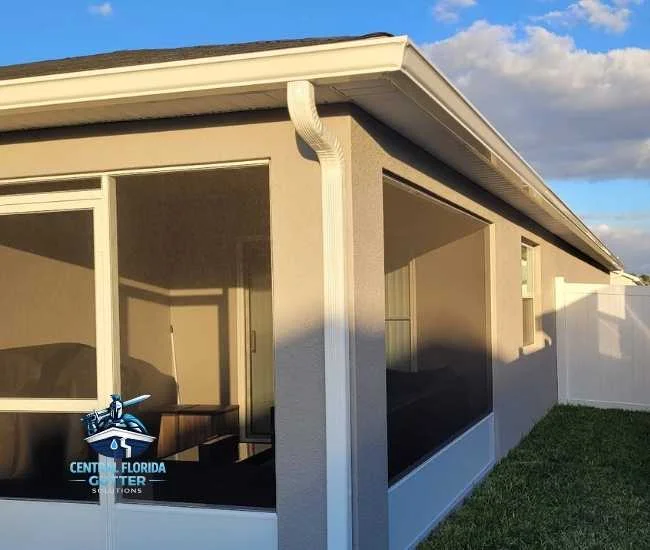
Salt Air & Tides Shape Gutter Life in Gibsonton
Gibsonton’s coastal environment changes the way rainwater behaves. Winds off the Alafia River push water sideways and onto the roof, while tidal influences elevate moisture levels near the foundation. Steep rooflines and valleys funnel water into short gutter runs, which can’t always handle the volume.
Over time, the concentrated sections of the gutter will begin to overflow. Even if the rest of the system looks clear, water stacks up faster than it can drain away.
This leads to water spilling over the edge, eroding the ground below the gutter, and leaving homeowners with soft spots and trenches around the foundation.
Complete Gutter Solutions For Every Home
From installation and cleaning to replacement and guards, Central Florida Gutter Solutions provides complete gutter services designed to protect and maintain your home across Central Florida.
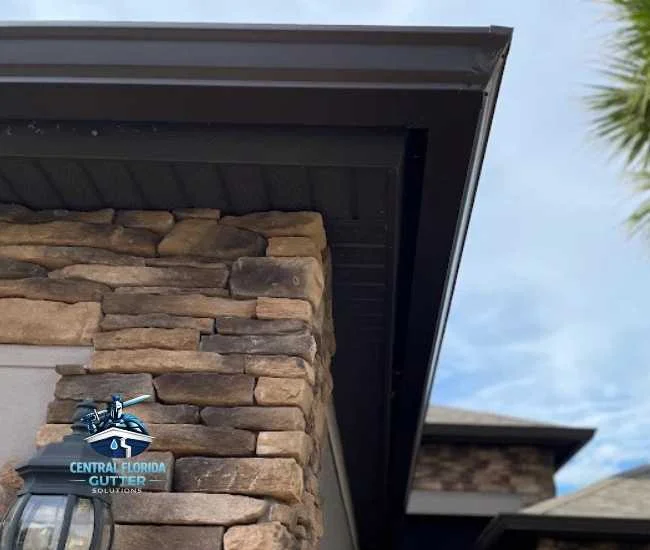
The Same Path Every Time
Most calls begin when the same pooling or erosion returns. Homeowners repair sod near a downspout or replace washed mulch, only to see the problem repeat.
We assess roof valleys, check pitch, and measure discharge distance. In many Gibsonton homes, the system is intact but undersized for local conditions, and increasing capacity or extending downspouts often resolves the issue.
If you’re seeing the same water problems repeatedly, call 863-390-2150 and we’ll walk through your options.
Salt and Soil Slowly Weaken Your System
Salt air corrodes gutters faster than most homeowners realize, especially around US-41. At the same time, Gibsonton’s sandy soil absorbs water quickly but doesn’t allow it to drain easily, leading to gradual erosion.
We frequently find that hidden steel fasteners behind aluminum gutters corrode first, loosening the system from the inside even when the exterior still looks intact.
You may notice fascia rotting or sagging gutters as the system weakens over time. But these are symptoms of a problem that’s been building for years. Waiting only increases the risk of further damage, like exposed slab edges or soft soil around the foundation.
Debris buildup, especially in areas near the river or agricultural fields, can also slow drainage and increase strain on the system, making everything worse.
Resilient Gutters Built for Gibsonton’s Environment
We install seamless aluminum gutters sized for Gibsonton’s coastal exposure. Most homes perform best with six-inch systems, while properties near the river or exposed to salt air may require larger gutters and corrosion-resistant hangers.
We also handle targeted gutter repairs, reinforcing sagging sections, resealing corners, and extending downspouts so water clears the foundation. Cleaning can reduce debris, but it will not fix corrosion or undersized sections.
Call 863-390-2150 to find the best solution for your home.
Exposure Takes a Toll on Gutter Systems
Older homes near US-41 often still have original gutter systems that weren’t designed for today’s salt exposure or storm volume. Over time, gutters corrode at fasteners and begin pulling away from the fascia.
Newer homes near the Seffner border often have steep roofs and multiple valleys that concentrate runoff into smaller sections. If the gutters aren’t sized properly, overflow becomes a regular issue.
The consistent factor is exposure—salt, wind, and flat ground all contribute to wear and tear on the system.
As fastener strength declines, sections begin to separate slightly at the fascia line, allowing water to track behind the gutter instead of over the front edge.
Gibsonton Homeowner Questions About Gutters
Fix the Pattern Before It Reaches Your Foundation
Water problems in Gibsonton rarely start suddenly. The issue builds over time as salt air, wind, and flat terrain stress your gutter system. The earlier you understand how your system is responding, the easier it is to make adjustments before visible damage occurs.
If you’re seeing corrosion, pooling, or recurring overflow around your Gibsonton home, call 863-390-2150. We’ll explain what’s happening and what typically works best for local conditions.
When Fasteners Fail Before the Gutter Does
In Gibsonton, the visible gutter is often not the first component to weaken. The mounting hardware is. Salt exposure along corridors like US-41 accelerates corrosion at screws, brackets, and hidden hangers long before the aluminum body shows obvious damage.
From the ground, the system may appear straight. Up close, we often see oxidized screw heads and hairline gaps forming where the hanger meets the fascia. The gutter itself can still carry water, but the connection point is slowly losing strength.
On one home near the river, the aluminum run was structurally sound. The issue was that several concealed fasteners had rusted through at the back channel. During heavier rain, the gutter flexed outward slightly under load. Not enough to detach, but enough to change how water exited the drip edge.
This is not about capacity or ground erosion. It is about attachment integrity. Once a few fasteners weaken, weight redistributes unevenly across the remaining brackets. The system begins to rely on fewer support points, increasing stress at corners and seams.
In coastal conditions, hardware selection matters as much as gutter size. When mounting components degrade, the entire system shifts behavior even if the trough itself appears serviceable.
River-Facing Wind Lift Zones
Homes closer to the Alafia River experience another pattern. Wind does not just push rain sideways. It can create lift pressure beneath the front lip of the gutter.
When gusts move across open elevations, negative pressure forms briefly under the trough edge. If hangers are already weakened, that lift adds small upward stress during storms.
We have observed sections where the front edge rolled outward slightly over time, not from overflow, but from repeated wind lift cycles. The gutter still drains, yet its profile changes enough to reduce forward containment.
This mechanism is structural rather than hydraulic. Wind load interacting with compromised attachment points can reshape the gutter’s edge long before corrosion becomes visually obvious.
Protect Your Home With Gutter Experts You Can Trust
From seamless gutter installations to reliable repairs, our team delivers clean workmanship, durable materials, and results that stand up to heavy rain. We make protecting your home simple and stress-free.