
Gutter Installation & Repair in Plant City, Florida
Plant City homes with wide roof spans and deep overhangs need gutters sized and pitched correctly. We install seamless systems and replace aging runs.
Gutter Installation and Repair in Plant City, Florida
Homes in Plant City tend to develop gutter problems quietly. As roofs and layouts change, water leaves the roof differently while the original gutter system often stays the same, and the effects usually show up near the slab.
We hear from homeowners who notice the same ground staying damp or mulch thinning in the same areas. These patterns are rarely sudden and usually point to where roof valleys release water and how the gutter system lets it exit.
In many of Plant City’s open subdivisions, long gutter runs absorb full sun for most of the day, and that heat changes how the system behaves over time.
If something around your home has started to feel consistent in the wrong way, call 863-390-2150 and talk it through with us.
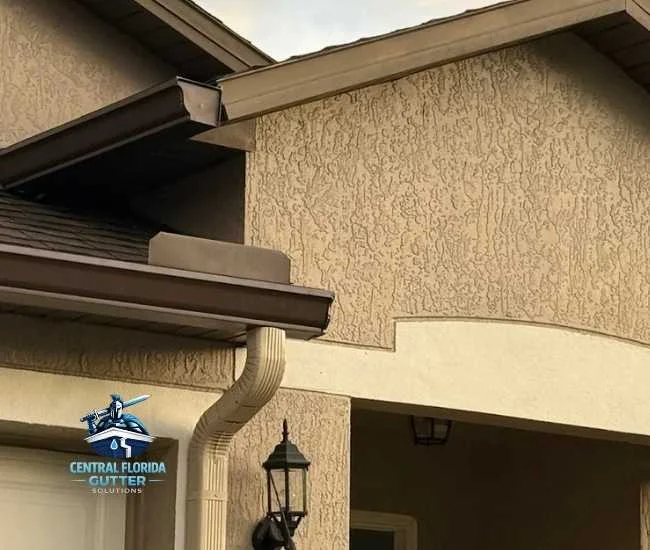
Where Roof Valleys Decide Where Water Lands in Plant City
Plant City homes commonly use roof layouts that funnel water into valleys before it ever reaches the gutter. Instead of spreading evenly along the roofline, water concentrates into a few exit points.
When that concentrated flow reaches a gutter that is undersized or positioned poorly, water does not move away cleanly. It spills near the slab and spreads outward along the surface. At that point, yard slope matters less than where the water is being released.
Once water begins leaving the system at the same location, it tends to follow that surface route repeatedly.
Complete Gutter Solutions For Every Home
From installation and cleaning to replacement and guards, Central Florida Gutter Solutions provides complete gutter services designed to protect and maintain your home across Central Florida.
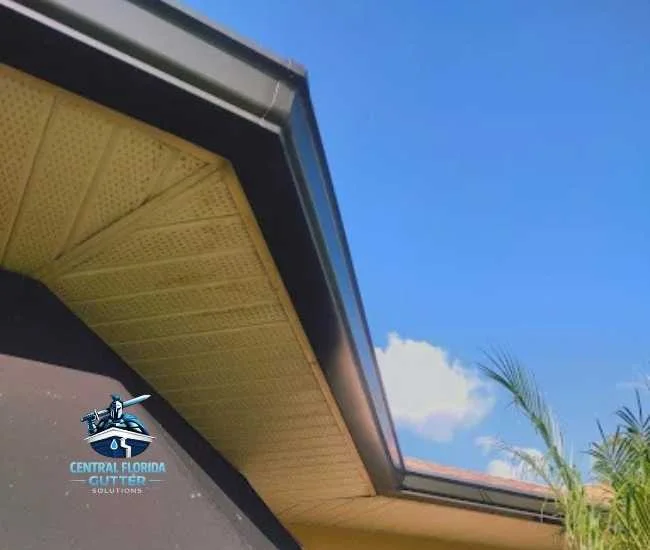
Repeating Ground Clues
Most Plant City homeowners do not call because something suddenly fails. They call because the same thing keeps happening, like a damp strip that never fully dries, mulch that will not stay in place, or water collecting in the same shallow area near the house.
When water exits the gutter system at the same point repeatedly, it teaches itself where to go next. Tracing that route back to the roof is often when the issue starts to make sense.
If that pattern sounds familiar, calling 863-390-2150 early often helps identify the cause instead of just the symptom.
How Surface Patterns Become Established Over Time
Water problems in Plant City tend to reinforce themselves. Each time water follows the same surface route, that path becomes easier to take again, especially around slab foundations with compacted soil where water spreads outward before it drains away. The issue often looks minor at first, even as the same area stays damp longer with each cycle.
Correcting the system earlier usually means smaller adjustments. Waiting allows water more time to establish the same route.
Older spike-and-ferrule fasteners common in 1980s builds often loosen gradually as expansion and contraction cycles work against the wood fascia.
Controlling Valley Discharge
Our work in Plant City focuses on correcting how roof valleys feed into the gutter system and where that water is allowed to exit. That may involve resizing runs, adjusting pitch, correcting valley outlets, or rerouting downspouts away from slab edges.
In areas where valley-heavy roof designs are common, deliberate discharge placement matters more than appearance. Cleaning can restore flow, but it does not correct valley overload or poor exit location.
If you want to talk through what actually makes sense for your home, call 863-390-2150 and we will walk through it together.
How Local Home Styles Shape Water Release
Plant City homes span multiple building eras, each with distinct drainage behavior. Older homes closer to the city center often rely on gutter systems designed for simpler roof layouts, while ranch-style homes with long roof runs tend to funnel water into shared exits, increasing load at a few critical points.
Newer homes in communities like Walden Lake introduce deeper valleys and wider roof spans. When several roof planes drain toward the same outlet near a slab foundation, water tends to spread outward before it ever moves away.
Different homes, same physics. Concentrated water needs direction.
Questions We Hear From Homeowners in Plant City
When Long Gutter Runs Start to Move
In neighborhoods like Walden Lake and along James L. Redmon Parkway, many homes were built with long, uninterrupted 5-inch K-style gutter runs. On open lots that used to be farmland, those metal runs sit in direct sun most of the day. By mid-afternoon, aluminum can become hot enough to expand noticeably across a forty-foot span.
Without expansion breaks or upgraded hangers, that movement has to go somewhere. What we often see is a slight outward bow in the center of the run. The ends stay pinned in place, especially where older spike-and-ferrule fasteners were driven into wood fascia decades ago. Over time, the fasteners begin to loosen, and the gutter no longer sits tight against the fascia board.
A homeowner might first notice a small separation at a corner miter or a faint line along the fascia where water has started slipping behind the system. It does not look dramatic. But once the gutter stops holding its original alignment, pitch changes subtly. Water begins favoring one section, seals experience uneven stress, and small gaps widen under repeated heat cycles.
This is not a cleaning issue and it is not simply about capacity. It is about movement. When the run itself starts shifting, the system no longer performs the way it was installed to.
What Happens Behind the Fascia Board
When a gutter pulls slightly away from wood fascia, even by a fraction of an inch, moisture can track behind it instead of dropping cleanly into the trough. In Plant City’s humidity, that narrow space does not dry quickly, especially with a seasonal high water table limiting airflow under the eaves.
Over time, soffit panels can begin to sag as the substrate absorbs moisture. The wood header behind the fascia may stay damp longer than it should. That environment becomes attractive to subterranean termites because it provides a sheltered path above the treated soil line.
From the ground, the gutter may look mostly intact. The problem develops quietly behind the trim where the attachment first loosened.
Guiding Water Away From the Slab Before It Chooses Its Own Path
Every home in Plant City teaches water where to go. Over time, water follows the easiest route rather than the safest one. When gutter systems are designed around roof valleys, slab foundations, and how water concentrates here, those routes stay controlled.
When moisture stays trapped behind a shifting gutter, the damage often moves inward before anything obvious appears outside.
If you want help understanding what your home is doing with water and what usually comes next if nothing changes, call 863-390-2150.
Protect Your Home With Gutter Experts You Can Trust
From seamless gutter installations to reliable repairs, our team delivers clean workmanship, durable materials, and results that stand up to heavy rain. We make protecting your home simple and stress-free.