
Gutter Installation & Repair in Winter Garden, FL
Winter Garden homes with tile roofs and long overhangs need gutters set with proper pitch. We install seamless systems and replace aging runs.
Gutter Installation & Repair in Winter Garden, Florida
Winter Garden is shaped by two distinct eras of development. North of SR-50, older homes sit beneath heavy oak canopy near Plant Street and Lake Apopka, while south of SR-50 in Horizon West, newer neighborhoods feature larger rooflines and deep valleys that move water quickly and decisively.
On older north of SR-50 homes with wood fascia, the gutter can stay attached while the fascia slowly rolls outward under load, which changes how the roof edge feeds the trough.
Over time, what we usually see is water repeating the same routes along one corner of the slab, one section of fascia, or one stretch of landscaping.
If you want to talk through what you are seeing and how water is moving around your home, call 863-390-2150 and we will walk through it with you.
Where Canopy and Rooflines Set the Direction
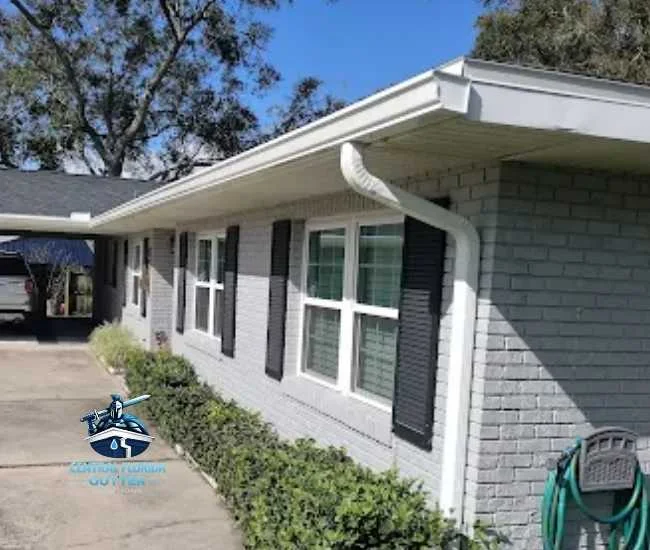
In historic neighborhoods near Plant Street, dense oak canopy slows drying. Gutters stay damp longer, debris remains saturated, and minor restrictions can push water back under the roof edge. Around here, we often see dark fascia lines forming on shaded sides long before overflow is obvious.
In Horizon West, the issue is different. Steep roof pitches and multiple valleys concentrate large volumes into a few exit points. When roof valleys move more water than the gutter can manage, runoff overshoots the edge, falls repeatedly near the same foundation line, and that is when homeowners usually notice mulch shifting or soil thinning along one corner.
Water in Winter Garden tends to follow the path it finds first. If the system does not redirect it properly, that path becomes more defined with time.
Complete Gutter Solutions For Every Home
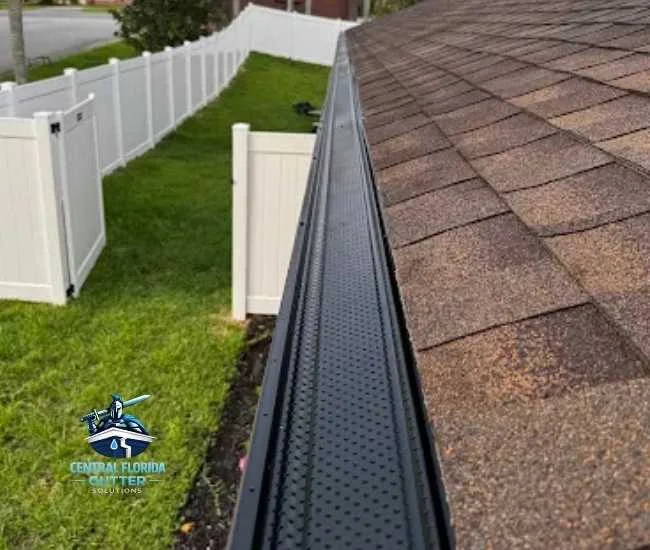
From installation and cleaning to replacement and guards, Central Florida Gutter Solutions provides complete gutter services designed to protect and maintain your home across Central Florida.
Recurring Issues in Winter Garden Homes
Most homeowners in Winter Garden do not call after one isolated issue. They reach out when the same signs return over multiple seasons, such as a corner of the home that stays damp longer than the rest or soil washing away near the same downspout. Over time, those repeated patterns tend to define the same weak points along the roofline and foundation.
We see this most often in oak-heavy neighborhoods north of SR-50 where debris builds quickly.
If the run was mounted level for curb appeal and spike fasteners are still present, standing water weight can widen the holes and start sagging that shows up first as a small joint weep at an end cap or corner.
If you are unsure whether what you are seeing is typical for Winter Garden or something that tends to progress, call 863-390-2150 and talk it through with us.
How Small Drainage Imbalances Quietly Shift Structure Over Time
Gutter issues in Winter Garden usually develop in chains rather than single failures. Debris restricts flow. Restricted flow allows water to sit. Standing water increases weight and overflow at the next release point.
When overflow becomes routine, water falls repeatedly in the same location, which leads to erosion along slab edges and walkways, and that is when homeowners usually notice soft ground or settling concrete.
In shaded sections of the home, moisture often lingers longer than homeowners expect. When dampness returns again and again in the same areas, fascia and trim can slowly begin to weaken, even if the change feels subtle at first. These patterns tend to develop quietly over time. Ignoring them does not make them disappear. It simply gives the underlying issue more time to settle in and become harder to correct.
Designed for Roof Volume and Site Conditions
Gutter systems in Winter Garden must manage debris load, roof volume, and discharge distance together. Newer homes with steep valleys require enough capacity to prevent repeated overshoot at the same sections, especially where multiple roof planes feed into one run.
Our work focuses on matching gutter size to roof output and extending discharge far enough to prevent water from cycling back toward the slab.
If you want to walk through what makes sense for your home and neighborhood, call 863-390-2150 and we will explain what usually works here.
Failure Point Focus: Structural Shift Along the Eave Line
Winter Garden has a mix of older ranch style homes near Plant Street and newer builds with long runs and deep overhangs. In both cases, the attachment surface matters as much as the gutter size. On older homes with wood fascia that was never braced for the leverage of a water heavy trough, the board can slowly rotate outward between fasteners. The gutter still looks attached, but the back edge drops just enough that water starts feeding behind the run instead of into it.
A common scenario is a long run installed level to look straight from the street. It still drains, but it also holds shallow pockets after each cycle. If spikes are still in place, those holes widen over time. The run begins to sag, the drip edge stops dropping cleanly into the trough, and homeowners start noticing peeling paint behind the gutter line or a damp strip at soffit vents before anything looks dramatic outside.
Heat makes the next phase show up at joints. Long aluminum runs expand hard in the sun, then cool fast when storms roll through. If the ends are pinned too tightly, the metal creeps and shears sealant at end caps and miters until a slow weep starts. Fixing it means corrected pitch, tighter hanger spacing, and joints rebuilt with expansion in mind, not just more caulk.
Why Two Homes a Mile Apart Can Behave Very Differently
Winter Garden homes span more than a century of construction, and each era presents different drainage challenges. Historic properties near downtown often feature steep gables and dense tree canopy that drops debris throughout the year. Many of these original systems were not built to handle concentrated valley runoff or the demands created by modern roofing materials, which can place added stress on aging fascia and gutter lines.
Horizon West homes introduce Mediterranean and modern Craftsman rooflines with multiple valleys feeding into single runs. These roofs shed water efficiently, but only when gutters are sized and routed properly.
Two homes only a mile apart can experience very different water behavior. The difference usually comes down to tree cover, roof pitch, discharge length, and how far water is allowed to travel once it leaves the system.
Real Questions We Hear Most Often
Where Downspouts End Matters
Some Winter Garden pockets still rely on septic, and newer builds may use pop up emitters to move roof water toward swales. That changes what good discharge looks like. A downspout that ends in the wrong spot can keep wetting the same area near a drain field even when the surface looks dry, because moisture is spreading below grade.
Emitters buried too shallow can also stay clogged under the soil line and keep water cycling back toward the foundation edge. Homeowners notice soft ground near one corner, a faint odor after storms, or a strip that never fully dries in shaded areas. In those cases, the fix is usually routing and outlet placement, not bigger gutters. It is about getting water to the part of the lot designed to accept it.
Catch the Pattern Early
Water issues in Winter Garden follow predictable paths shaped by tree cover, roof geometry, elevation, and neighborhood design, and once runoff begins using the same route, it reinforces that direction over time. Understanding how water is moving now makes it easier to adjust the system before erosion, fascia damage, or structural wear become visible.
When water begins tracking behind the gutter edge, the escalation is often soffit vent saturation and attic humidity at rafter tails, not just what you see at the ground.
If you want a clear picture of what is happening around your home and what usually comes next if nothing changes, call 863-390-2150 and we will walk through it with you.
Protect Your Home With Gutter Experts You Can Trust
From seamless gutter installations to reliable repairs, our team delivers clean workmanship, durable materials, and results that stand up to heavy rain. We make protecting your home simple and stress-free.